
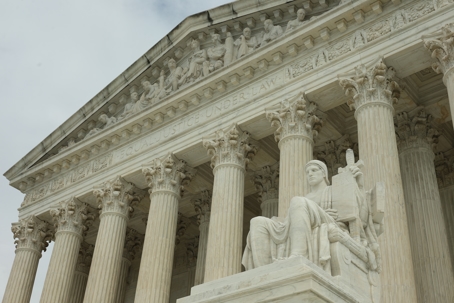
Arriving at the U.S. border and claiming fear of return to one’s home country does not give an individual a statutory right to be allowed to enter the United States and apply for asylum, according to one of the latest decisions by the Supreme Court. In order for a noncitizen to be eligible to apply, they must have entered the United States. Functionally, for those presenting themselves at U.S. ports of entry to claim fear of persecution or torture in their country of origin, this means that a U.S. border official must first allow the person to physically cross the border into the U.S. before claiming such fear of return triggers the process through which one applies for protection in the United States.
The policy at issue, known as “metering,” began in 2016, when border officials began blocking migrants from entering the United States through ports of entry when their border facilities were said to be at capacity. CBP claimed that those facilities were running out of space and food, and creating unsafe conditions for both migrants and border officials. In response, border officials began requiring individuals to remain in Mexico and wait for the opportunity to be processed. Through this policy, thousands of individuals seeking asylum were turned away. The policy was originally struck down by the District Court in the Southern District of California, a decision which the Ninth Circuit upheld. However, on June 25, 2026, via a 6-3 decision split along ideological lines, the Supreme Court overturned the two lower courts, allowing the policy to continue. Notably, the ruling does not foreclose the right of individuals who have entered the United States by alternative means to apply for asylum, such as with a visa or entering without being first inspected by border officials. Attorneys against the policy argued that enabling such a practice incentivized individuals to pursue these alternative means of entry to seek asylum.
The dissenting justices, led by Justice Sotomayor, argued that the majority’s reading makes no practical sense and renders part of the statute meaningless. More pointedly, they said that the ruling gives the Executive Branch an easy workaround to stop people from applying for asylum: just station officers at the threshold, and the entire mandatory asylum system evaporates.
Should you have questions or concerns about the impact of this policy on your own case, the experienced attorneys at Murray Osorio PLLC can help you understand your options. Call (800) 929-7142 or contact us online today to schedule a consultation.